
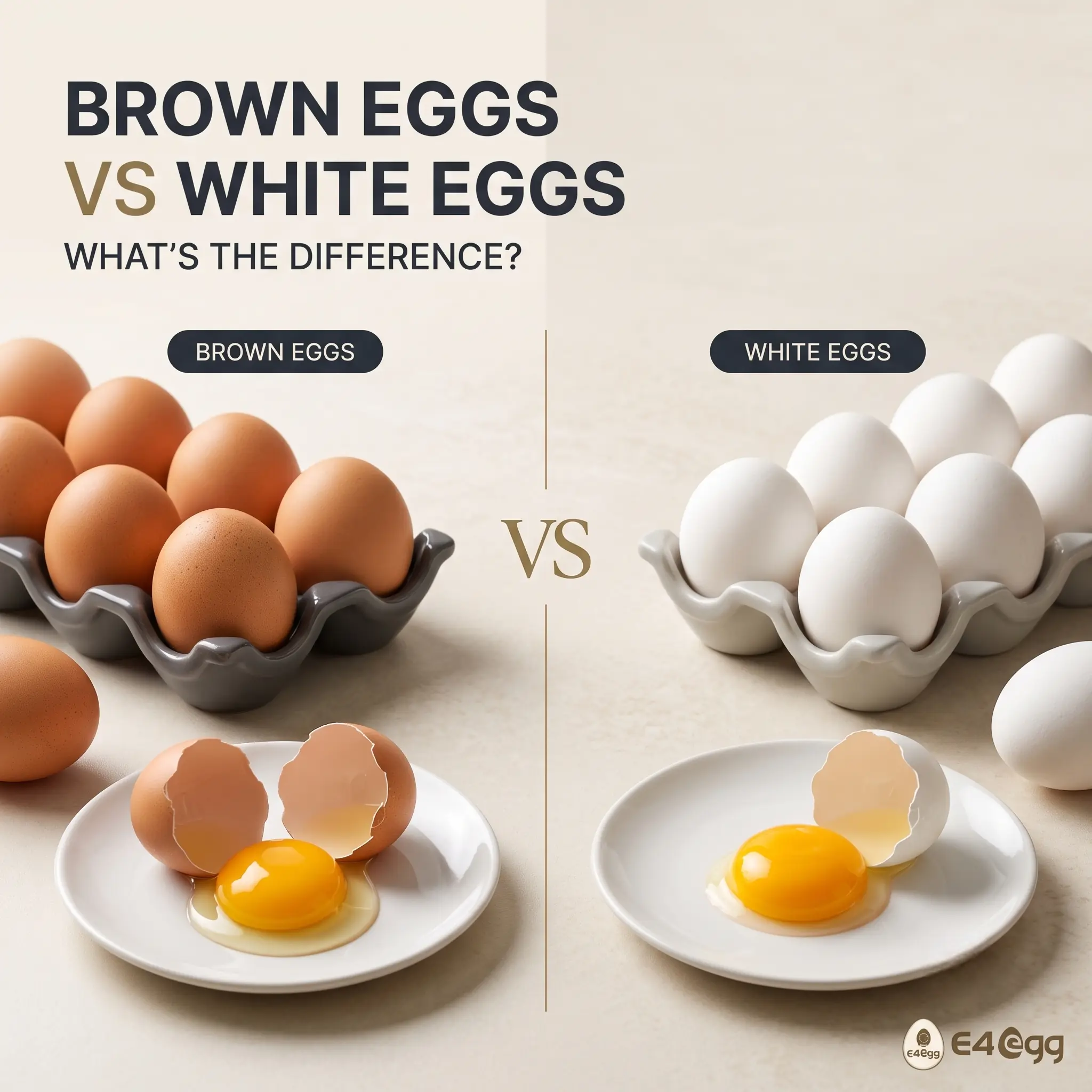
Brown Eggs vs White Eggs – What’s the Difference?
Introduction
When shopping for eggs, you may notice different shell colors, especially brown and white eggs. But what exactly makes them different?
Let’s take a simple look at brown eggs and white eggs and understand what you should know when choosing eggs for your kitchen.
What Makes an Egg Brown or White?
The main difference in shell color comes from the breed of the hen that lays the egg.
Some breeds produce eggs with white shells, while others produce eggs with brown shells.
The shell color itself doesn’t automatically determine whether an egg is better or worse.
Brown Eggs
Brown eggs have a naturally brown-colored shell and are commonly used for:
- Breakfast
- Omelettes
- Boiling
- Cooking
- Baking
- Everyday recipes
Their brown shells also give them a distinctive appearance.
White Eggs
White eggs have clean, white shells and are equally versatile for everyday cooking.
They can be used for:
- Scrambled eggs
- Fried eggs
- Omelettes
- Baking
- Sandwiches
- Curries and other recipes
Which One Should You Choose?
The choice between brown and white eggs can depend on your personal preference, availability and cooking needs.
Instead of focusing only on shell color, consider factors such as freshness, handling, packaging and how the eggs fit into your everyday cooking.
Why Choose e4egg?
At e4egg, our focus is on providing eggs that are carefully selected and packed with care.
You can explore our range of:
- Brown Eggs
- White Eggs
- Quail Eggs
Choose the type that works best for your kitchen and recipes.
Conclusion
Brown and white eggs can both be excellent choices for everyday cooking. The shell color mainly reflects the breed of hen rather than being a simple indicator of quality.
Explore the e4egg collection and find the eggs that suit your everyday meals.
e4egg – Quality Eggs for Every Kitchen.